


U.S.-IRAN CONFLICT
Iran threatens U.S. bases in Middle East following devastating nuclear site strikes
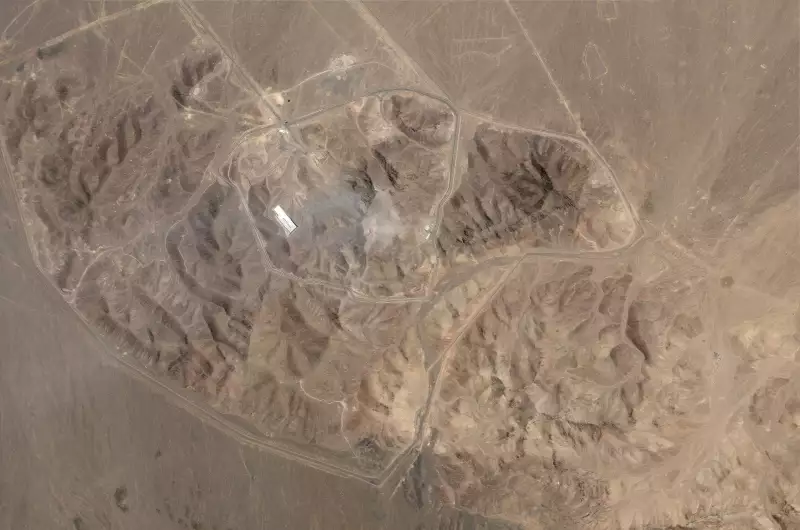
Iran on Sunday issued a stark warning, threatening U.S. military bases across the Middle East in retaliation for massive air strikes that Washington claims have obliterated Tehran’s nuclear program. These U.S. assaults, which included surprise attacks on the underground uranium enrichment facility at Fordow and nuclear sites in Isfahan and Natanz, have dramatically escalated the conflict, drawing immediate global concern over regional stability.
The U.S. State Department swiftly issued a worldwide caution alert for its citizens abroad as aerial bombardments between Iran and Israel continued to rage, including fresh Israeli strikes on what it described as military targets within Iran. International focus is now sharply centered on fears that the unprecedented U.S. actions, following Israel’s earlier bombing campaign against Iran this month, could plunge the volatile region deeper into conflict.
Ali Akbar Velayati, an advisor to Iran’s supreme leader Ayatollah Ali Khamenei, directly threatened American-used bases. “Any country in the region or elsewhere that is used by American forces to strike Iran will be considered a legitimate target for our armed forces,” he stated via the official IRNA news agency, adding, “America has attacked the heart of the Islamic world and must await irreparable consequences.” In a sign of market nervousness, oil prices surged over four percent in early Asian trading.
President Donald Trump, who ordered the strikes, celebrated a “spectacular military success,” claiming the operation “taking the ‘bomb’ right out of their hands.” While his administration aides stressed that regime change was not an intervention goal, Trump openly floated the idea on Truth Social: “It’s not politically correct to use the term, ‘Regime Change,’ But if the current Iranian Regime is unable to MAKE IRAN GREAT AGAIN, why wouldn’t there be a Regime change??? MIGA!!!”
Defense Secretary Pete Hegseth affirmed at a Pentagon briefing that Iran’s nuclear program had been “devastated” and that the operation did not target Iranian troops or civilians. General Dan Caine, the top U.S. general, added that initial assessments indicated “extremely severe damage and destruction” at all three sites, though a full determination would take time. Israeli Prime Minister Benjamin Netanyahu, whose country’s military strikes are reportedly “very, very close to completing” their objectives of destroying Iran’s nuclear and missile capabilities, indicated his operations would conclude once these goals are met.
Tehran protests and international reactions
Amidst the escalating rhetoric, Iranian President Masoud Pezeshkian vowed a “response” to the U.S. attacks. Pro-government protests erupted in central Tehran on Sunday, with citizens waving flags and chanting slogans. A 46-year-old housewife from Semnan province expressed shock, fearing for those living near targeted facilities even though her province was distant. Vice President JD Vance claimed the strikes “set the Iranian nuclear program back substantially,” but acknowledged Iran still possessed highly enriched uranium, which the U.S. plans to address in the coming weeks to prevent its conversion to weapons-grade material. Another Khamenei advisor, Ali Shamkhani, asserted on X that “even if nuclear sites are destroyed, game isn’t over, enriched materials, indigenous knowledge, political will remain.” International Atomic Energy Agency (IAEA) Director Rafael Grossi reported visible craters at Fordow to the UN Security Council, but noted the underground damage remained unassessed.
The main U.S. strike force reportedly comprised seven B-2 Spirit bombers flying an 18-hour mission from the American mainland. In immediate response, Iran’s armed forces targeted sites in Israel, including Ben Gurion airport, injuring at least 23 people. Local media reported nine Revolutionary Guards killed in Israeli attacks on central Iran, alongside three fatalities from an ambulance strike. Iran’s health ministry reported over 400 killed in Israeli attacks, while official Israeli figures list 24 deaths from Iranian strikes.
International condemnation and calls for de-escalation poured in. The UAE, Qatar, and Oman, previous mediators in U.S.-Iran nuclear talks, criticized the U.S. strikes. European nations France, Germany, and Britain urged Tehran “not to take any further action that could destabilize the region.” Russia “strongly condemns” the U.S. attacks as a “flagrant violation of international law,” and China’s foreign ministry “strongly condemns” them for exacerbating tensions, calling for a ceasefire.
Late Sunday, the U.S. State Department issued a “worldwide caution” alert, advising American citizens abroad to “exercise increased caution” due to potential demonstrations against U.S. interests, highlighting the increased security risk in the volatile region.
RELATED STORY: World reacts as U.S. strikes Iran’s nuclear facilities