



SARA DUTERTE’S IMPEACHMENT
House appeals SC ruling on Sara Duterte impeachment
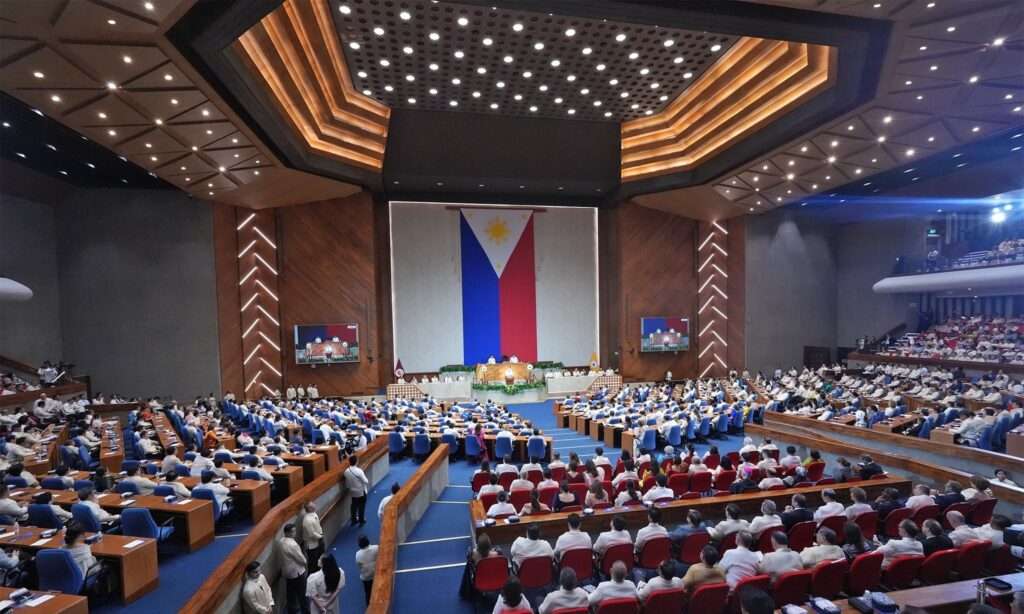
MANILA, Philippines — The House of Representatives on Monday asked the Supreme Court to reverse its July 25, 2025 decision that junked the impeachment case against Vice President Sara Duterte. In its motion for reconsideration (MR) filed on August 4, the House asserted its exclusive constitutional duty to prosecute impeachable officials and the Senate’s role to try such cases.
The House stated in its motion that it is not seeking a specific political outcome, but rather that the Supreme Court “allow Congress to perform the duties the Constitution asks of both its chambers to initiate an impeachment proceeding for the House, and to try the same, for the Senate.” It further urged the Court to “uphold the Constitution” and “not to stand with a certain political faction or another.”
Arguments of the House
The House, with the Office of the Solicitor General (OSG) as its legal counsel, presented several key arguments in its appeal:
- Sole initiated complaint: The House argued that the fourth impeachment complaint, signed by 215 members, is the only properly “initiated” impeachment case against the Vice President. It contended that this complaint met the constitutional requirement of being endorsed by at least one-third of House members, allowing its direct transmission to the Senate for trial, bypassing Committee deliberations.
- One-year bar rule: The House asserted that the archiving of the first three impeachment complaints on February 5, done after the transmittal of the fourth complaint, did not violate the one-year bar rule. It cited the Supreme Court’s Francisco v. House decision, which defines “initiation” based on either the filing and referral to a committee (first mode) or mere filing (second mode). The appeal stated that reckoning the bar from a complaint’s “dismissal” would defeat the purpose of the rule and “frustrate the spirit of Article 11 [of the Constitution].”
- Due process: The House maintained that the filing of an impeachment case against the Vice President did not violate her right to due process. It argued that the trial before the Senate impeachment court, as provided under the Constitution, is the due process. Furthermore, it stated that the right to due process under Article 3 (Bill of Rights) cannot be used to undermine Article 11 (Accountability of Public Officials), as “Due process is already built into Article 11, Section 3 [of the Constitution] itself, in the form of the Senate trial.”
- House authority on archiving: The House contended that archiving the first three impeachment complaints did not constitute grave abuse of discretion. It highlighted the House’s authority, affirmed by the Supreme Court in the Gutierrez v. House Committee on Justice case, to evaluate impeachment complaints before referral. This allows the House to “deliberate on the same and choose, in its discretion, to dismiss sham, prohibited, or unverified complaints.”
House Speaker Romualdez’s statement
In a statement, House Speaker Ferdinand Martin Romualdez confirmed the filing of the motion, emphasizing it as an “exercise in constitutional stewardship—an affirmation that every branch must act with fidelity to the Charter that gives us all our power.” He added, “This is not an act of defiance or disrespect… We act not to provoke a clash of institutions, but to prevent the erosion of the people’s right to accountability.”
Romualdez reiterated that the Constitution grants the House “exclusive power to initiate all cases of impeachment,” a power he described as “not shared. Not subject to pre-approval. And not conditional.” He stated that the Supreme Court’s ruling “misread of facts and a retroactive imposition of new rules,” and that the House’s actions were consistent with precedents like Francisco v. House.
Background of the ruling
The Supreme Court spokesperson Camille Ting had announced on July 25, 2025, that the articles of impeachment transmitted by the House to the Senate were deemed unconstitutional. The Court’s ruling cited violations of the 1987 Constitution’s one-year bar rule.
The fourth impeachment complaint, based on allegations of misuse of confidential funds and other constitutional violations, was filed and signed by 215 House members on February 5. The articles of impeachment were then immediately transmitted to the Senate on the same day, as mandated when at least one-third of all House members endorse a complaint.
In February, two petitions were filed before the Supreme Court seeking to halt the impeachment complaints against Duterte. The House had previously asserted that all impeachment complaints were acted upon within the required 10 session days, clarifying that “session days” differ from “calendar days” or “working days.”
The OSG filed the motion for reconsideration on Monday afternoon via the Philippine Judiciary Portal, with the House prosecution panel providing copies to the media.