



Is Israel’s Iron Dome Failing? Shocking Depletion Fears Emerge Amid Iran’s Relentless Barrage!
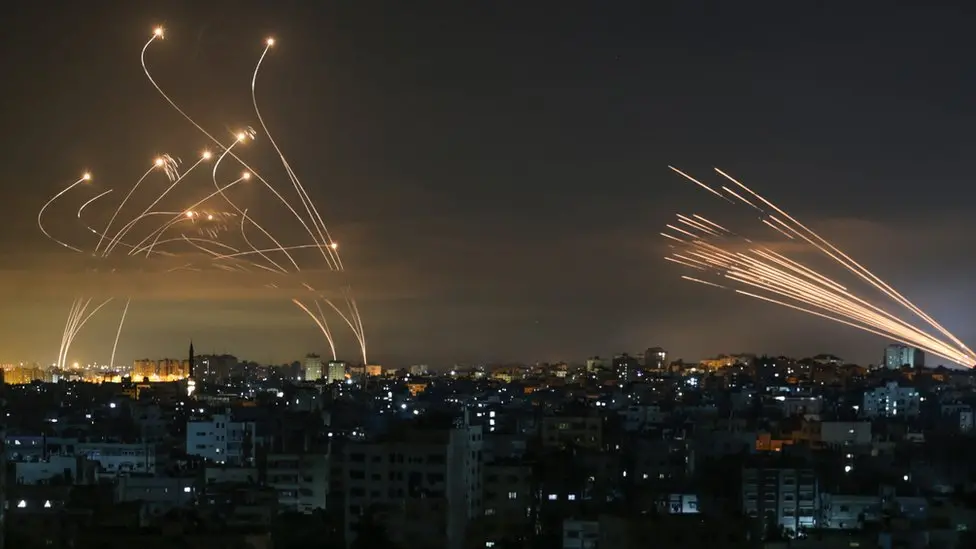
Israel’s multi-layered air defense system, a sophisticated network including the renowned Iron Dome, is reportedly showing signs of strain and potential depletion under the intense and sustained barrages of Iranian missiles and drones. This raises urgent questions about its long-term sustainability without significant international resupply.
While Israeli officials continue to report high interception rates, intelligence assessments from various sources suggest that the sheer volume and increasing sophistication of Iranian projectiles are pushing Israel’s defensive capabilities to their limits. One U.S. official, briefed on intelligence, reportedly warned that Israel’s interceptor stocks, particularly for the Arrow system (designed for long-range ballistic missiles), could be depleted within 10 to 12 days if Iran maintains its current rate of fire.
The Iron Dome, while a crucial component of Israel’s defense, is primarily designed to intercept shorter-range rockets and mortars, like those often fired from Gaza. As explained by Travis Hawley, a national security analyst and former U.S. Air Force intelligence officer, the Iron Dome was not originally engineered to stop ballistic missiles, though it can act as a last-resort backup. For incoming ballistic missiles, Israel primarily relies on its more advanced Arrow systems—specifically Arrow II and Arrow III.
Despite these advanced layers, the infiltration of some missiles indicates a significant challenge for the entire integrated air defense system. Hawley noted that achieving a perfect 100% interception rate becomes extremely difficult when adversaries launch massive salvos, sometimes numbering 50 to 100 ballistic missiles simultaneously. Iran’s current offensive includes ballistic missiles, some of which it claims are hypersonic, posing a different and more challenging threat. Experts also highlight that while ballistic missiles achieve hypersonic speeds, Iran’s newer, more maneuverable models, such as the Fattah-1 and Khorramshahr, are harder to intercept than older, less agile projectiles. Indeed, some Iranian missiles have already successfully breached Israeli defenses, striking targets near military headquarters in Tel Aviv, an oil refinery near Haifa, and an intelligence complex.
The financial cost of maintaining these defenses is also immense, with estimates suggesting nightly operations could reach up to $285 million. Israel’s overall air defense architecture, which also includes the mid-range David’s Sling system, relies heavily on U.S. funding and munitions. The United States has historically provided billions in aid for these systems, and continued support or even direct intervention is seen as crucial for Israel to sustain its defense capabilities.
As the conflict enters its seventh day, concerns are mounting over whether Israel can continue to defend its skies effectively without immediate U.S. resupply or a significant de-escalation of Iranian attacks. While Israel is also conducting offensive operations to degrade Iran’s missile capabilities, destroying launchers and production facilities, intelligence suggests more than half of Iran’s substantial missile inventory remains intact, much of it hidden in underground silos. The coming days are expected to be critical in determining the trajectory of this escalating aerial confrontation.