

Wounded Filipinos in Israel rise to 8 as escalation continues
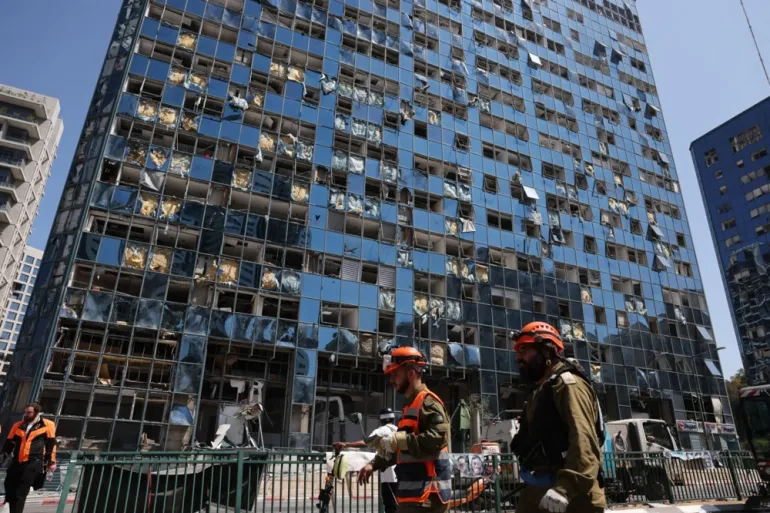
The number of Filipinos injured in the ongoing conflict between Israel and Iran has climbed to eight, with one remaining in critical condition, Philippine Ambassador to Israel Aileen Mendiola confirmed on Friday. Seven of the injured have since been discharged from hospitals.
The situation remains “fluid” in Israel, according to Ambassador Mendiola, even as people attempt to maintain a semblance of normalcy despite continuous missile exchanges. The conflict, which began on Friday, June 13, when Israel launched attacks targeting Iranian nuclear facilities, entered its seventh day on Thursday, June 19, following immediate counterstrikes from Tehran that labeled Israel’s actions a “declaration of war.”
Repatriation efforts and challenges for Filipinos
Ambassador Mendiola reported that 187 Filipinos in Israel have so far requested repatriation to the Philippines. The first batch of 26 repatriates is scheduled to depart Israel within the next two to three days.
Currently, there are approximately 30,000 Overseas Filipino Workers (OFWs) in Israel. This number excludes the 1,333 Filipinos already repatriated to the Philippines as of June 12, prior to the latest surge in hostilities. Additionally, five Filipino students studying in Europe, who were stranded in Israel, have received assistance to cross the border into Jordan.
A significant challenge for OFWs considering repatriation is access to their savings. Funds can typically be withdrawn through Ben Gurion Airport, which remains closed due to the ongoing geopolitical tensions. “This is one of the reasons why many of our countrymen are hesitant,” Mendiola explained. “They would prefer to fly out of Ben Gurion, and that would mean a couple of more days and weeks [of waiting].”
The deployment ban for Filipinos to Israel, initially imposed in October 2023 during the height of the Israel-Hamas conflict, remains in effect.
Seventh day of conflict sees intensified attacks and diplomatic push
On Thursday, June 19, the seventh day of the conflict witnessed intensified military actions and a flurry of diplomatic maneuvers:
- Renewed Strikes: Israel struck dozens of sites in Iran, including the Natanz nuclear facility and the heavy water nuclear reactor (now known as Khondab, formerly Arak). Simultaneously, Iran launched projectiles towards Israel. One such projectile reportedly struck Soroka Hospital in Beersheba, a major facility for Israeli troops, leaving dozens injured. Iran’s Islamic Republic News Agency (IRNA), however, claimed the “main target” was the Israeli army’s Command and Intelligence (IDF C4I) headquarters and a military intelligence camp in Gav-Yam Technology Park, not the hospital.
- Continued Explosions: Israel also claimed to have destroyed Iran’s internal security headquarters in Tehran, with multiple explosions reported in the Iranian city of Karaj and near Payam airport. A new wave of Iranian missiles reportedly caused several explosions over Jerusalem and Tel Aviv, resulting in at least four impact sites.
- US Involvement Speculation: Bloomberg News cited anonymous sources stating that senior U.S. officials are “preparing for the possibility of a strike on Iran in the coming days,” indicating Washington’s potential direct entry into the conflict. White House press secretary Karoline Leavitt stated President Donald Trump would decide on U.S. involvement “in the next two weeks,” while Republican Senator Lindsey Graham urged Trump to “go all in” and attack Iran’s Fordow nuclear site. The Associated Press reported that aircraft typically stationed at the major U.S. military base, Al Udeid Air Base in Doha, Qatar, have been dispersed.
- Threats and Defiance: Israeli Defence Minister Israel Katz threatened to “eliminate” Iran’s Supreme Leader Ayatollah Ali Khamenei. In response, Khamenei posted on X, interpreting the U.S.’s stance as a sign of Israel’s “weakness and inability.” Turkiye has increased security along its border with Iran.
Casualties, disruptions, and diplomatic calls for peace
Casualty figures continue to rise on both sides. Israel has reported at least 24 deaths from Iranian attacks, with over 200 wounded in the Soroka Hospital strike alone. Conversely, the Washington-based group Human Rights Activists reports at least 639 people killed in Israeli attacks across Iran, though Iran’s last official update put the death toll higher at more than 240 killed and 1,277 wounded. Iranian police also announced the arrest of 24 individuals accused of spying for Israel.
In Iran, authorities extended the cancellation of domestic and international flights until Thursday afternoon, and London-based internet watchdog Netblocks reported a 24-hour nationwide internet shutdown. In Israel, thousands have been displaced by Iranian retaliatory attacks, with the Ministry of Interior classifying 5,110 people as homeless, including 907 from Tel Aviv.
Diplomatic efforts are underway to de-escalate the conflict. Iran’s Foreign Minister Abbas Araghchi is scheduled to meet with his British, French, and German counterparts, along with the EU’s top diplomat, in Geneva on Friday. Iranian human rights activists and Nobel Peace Prize laureates Narges Mohammadi and Shirin Ebadi have urged an end to the war and called for dialogue.
Russian President Vladimir Putin stated he would “not even want to discuss” the possibility of Khamenei’s assassination, expressing belief that a peaceful “solution can be found” to the conflict by ensuring Iran’s peaceful nuclear activities and Israel’s “unconditional security.” UN rights chief Volker Turk condemned the treatment of civilians as “collateral damage.” French President Emmanuel Macron’s office also confirmed plans with European partners to propose a negotiated solution. The IAEA Director General Rafael Grossi reiterated that the nuclear watchdog has no evidence of Iran actively trying to build nuclear weapons, a claim disputed by Iran’s Foreign Ministry spokesperson, who accused the IAEA of biased reporting used as a “pretext” for Israeli attacks. Iraq’s top Shia leader Grand Ayatollah Ali al-Sistani warned of “dire consequences” if Iran’s supreme leadership is targeted. Israeli Prime Minister Netanyahu clarified that regime change in Iran is not a direct goal, though it “could be a result.”