

IRAN-ISRAEL CONFLICT
U.S. Embassy in PH requests public social media for certain visa applicants
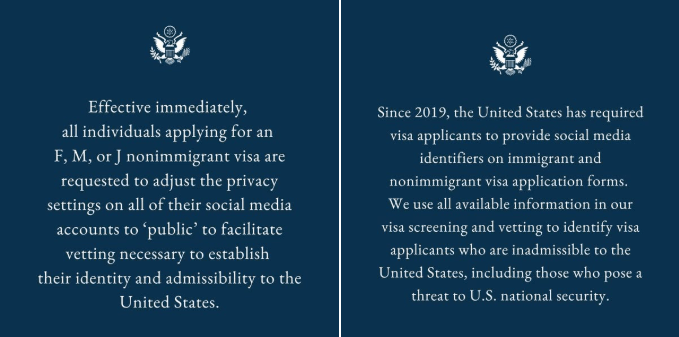
The U.S. Embassy in the Philippines has announced a significant update to its visa application process, requesting that all individuals applying for F, M, or J nonimmigrant visas adjust their social media privacy settings to “public.” This measure is being implemented to facilitate necessary vetting procedures aimed at establishing applicants’ identity and admissibility to the United States under U.S. law.
The announcement, made via the U.S. Embassy in the Philippines’ official Facebook page, specifically targets students (F visa), vocational students (M visa), and exchange visitors (J visa). While the post indicates this is a “request,” it underscores the importance of this adjustment for the successful processing of visa applications.
According to the embassy’s statement, making social media accounts public will allow consular officers to more effectively conduct the vetting process, which is crucial for determining an applicant’s eligibility to enter the United States. This includes verifying identity and ensuring compliance with U.S. immigration laws.
This development follows a broader trend in U.S. visa processing. Since 2019, the United States has required visa applicants to provide social media identifiers on both immigrant and nonimmigrant visa application forms. This expansion of information gathering is part of a comprehensive screening and vetting process designed to identify individuals who may be inadmissible to the United States, particularly those who could pose a threat to U.S. national security.
Prospective F, M, and J visa applicants are strongly advised to review their social media privacy settings across all platforms to ensure compliance with this new request before submitting their visa applications. Failure to do so may impact the efficiency or outcome of their visa processing. Applicants with questions regarding their specific circumstances are encouraged to refer to the official U.S. Department of State website or contact the U.S. Embassy in the Philippines for further guidance.