



IRAN-ISRAEL CONFLICT
Trump declares Israel-Iran ceasefire ‘in effect’ following deadly Iranian strikes on Israel
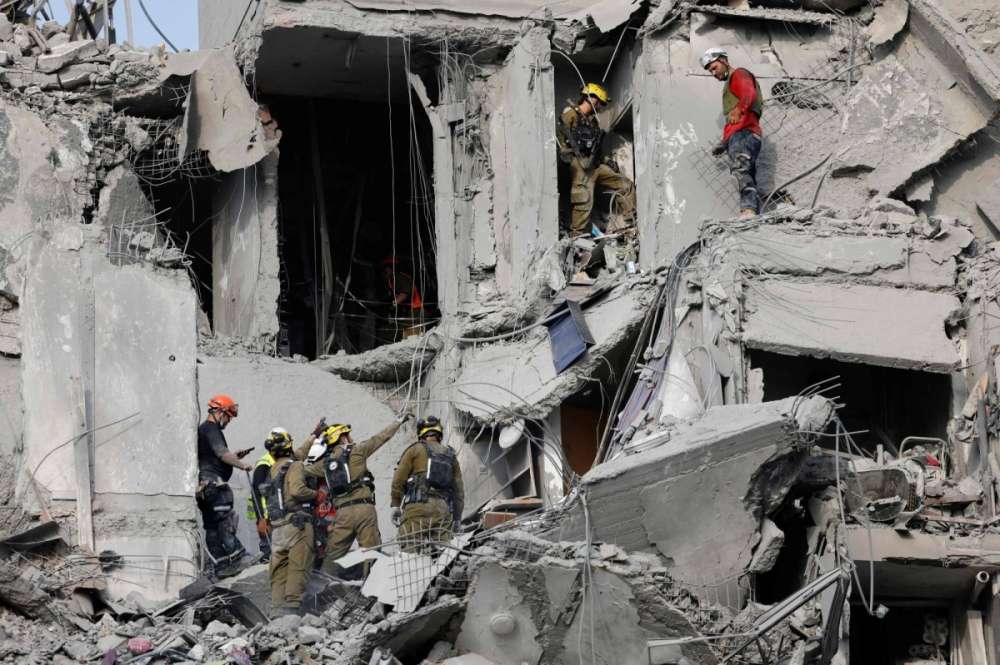
U.S. President Donald Trump announced early Tuesday that a ceasefire between Israel and Iran was now “in effect,” urging both sides, “PLEASE DO NOT VIOLATE IT!” His declaration came amid swirling confusion and conflicting reports, even as Israeli emergency services reported at least four fatalities from Iranian strikes that morning.
Trump’s announcement followed a night of Iranian missile barrages on Israel, some occurring even after Trump claimed an agreement had been reached, and continued Israeli attacks on Iran. Israel later confirmed its agreement to Trump’s “bilateral ceasefire.” In a statement, the Israeli government announced that Prime Minister Benjamin Netanyahu’s cabinet had convened to confirm the achievement of “all the objectives of Operation ‘Rising Lion’,” including the removal of “an immediate dual existential threat: nuclear and ballistic.” Israel thanked Trump and the U.S. for their support and warned of forceful retaliation against any ceasefire violation.
Just hours before Trump’s “in effect” declaration, Iranian Foreign Minister Abbas Araghchi had stated on social media that “as of now, there is NO ‘agreement’ on ceasefire or cessation of military operations.” However, he added a conditional willingness: “provided that the Israeli regime stops its illegal aggression against the Iranian people no later than 4 a.m. Tehran time, we have no intention to continue our response afterwards.”
The recent Iranian strikes were a retaliation for a weekend U.S. attack that bombed key Iranian nuclear facilities at Fordow, Natanz, and Isfahan. Trump had boasted these strikes “completely and totally obliterated” the sites, though battle damage assessments are ongoing and the whereabouts of Iran’s enriched uranium stockpile remain unclear. Iran’s counter-attack involved firing missiles at the Al Udeid air base in Qatar, a move that was reportedly forewarned to Qatar and the U.S., resulting in no casualties. Trump dismissed this as “weak” and thanked Tehran for “giving us early notice,” suggesting Iran had “gotten it out of their system.”
In an earlier social media post, Trump had laid out a phased ceasefire: “Officially, Iran will start the CEASEFIRE and, upon the 12th Hour, Israel will start the CEASEFIRE and, upon the 24th Hour, an Official END to THE 12 DAY WAR will be saluted by the World.” The BBC reported that explosions in Tehran ceased around 4 a.m. local time, aligning with the conditional timeframe from the Iranian foreign minister.
A senior White House official revealed that Trump brokered the ceasefire in a direct conversation with Israeli Prime Minister Benjamin Netanyahu on Monday, with Vice President JD Vance, Secretary of State Marco Rubio, and special envoy Steve Witkoff engaging in direct and indirect talks with Iranians. Israel’s agreement was contingent on Iran ceasing further attacks, terms which the Iranian government reportedly signaled it would abide by. Dennis Ross, a former U.S. envoy to the region, expressed cautious optimism, believing the truce would “hold” and the “war” would end, as “Iran has no interest in resuming anything soon.”
Trump went as far as predicting the peace agreement would be “unlimited” and last “forever,” expressing his belief that the war is “completely finished” and Israel and Iran “will never be shooting at each other again.” However, significant questions persist, particularly regarding Iran’s uranium stockpile and whether the ceasefire will lead to further discussions on Tehran’s nuclear ambitions. Iran maintains its right to enrich uranium for civilian purposes, despite Western and Arab concerns over its proximity to weapons-grade levels.
Israel has stated its war aims were to prevent Iran from acquiring atomic weapons and to destroy its ballistic missile stockpiles and launch sites. While denying intentions to topple the Iranian government, Israeli officials suggested their attacks could inadvertently lead to such a situation.
Speaking to Fox News after the ceasefire announcement, U.S. Vice President Vance reiterated that the U.S. bombing had achieved its objectives, claiming, “We know that they cannot build a nuclear weapon,” and that Iran’s existing highly enriched uranium was “buried” by the attack. International monitors, however, have stated they do not know the whereabouts of this material. Vance concluded, “If Iran is desperate to build a nuclear weapon in the future, then they’re going to have to deal with a very, very powerful American military.”
In the latest reported strikes, Israel identified multiple missiles launched from Iran early Tuesday morning, with one impacting a residential building in the south. Concurrently, Iranian authorities reported Israel launched fresh attacks on Tehran overnight, killing at least nine in a strike on a northern city. Negotiation details suggest Qatar played a key role in brokering the ceasefire, mediating talks with Iran.