


IRAN-ISRAEL CONFLICT
Marcos Jr. asserts Middle East conflict has ‘no significant’ economic impact on PH
President Ferdinand Marcos Jr. on Wednesday assured the public that the ongoing conflict in the Middle East has had “no significant” impact on the Philippine economy, stating that any effects of the Iran-Israel war “should be manageable.” However, he emphasized that his administration is closely monitoring for instances of price gouging.
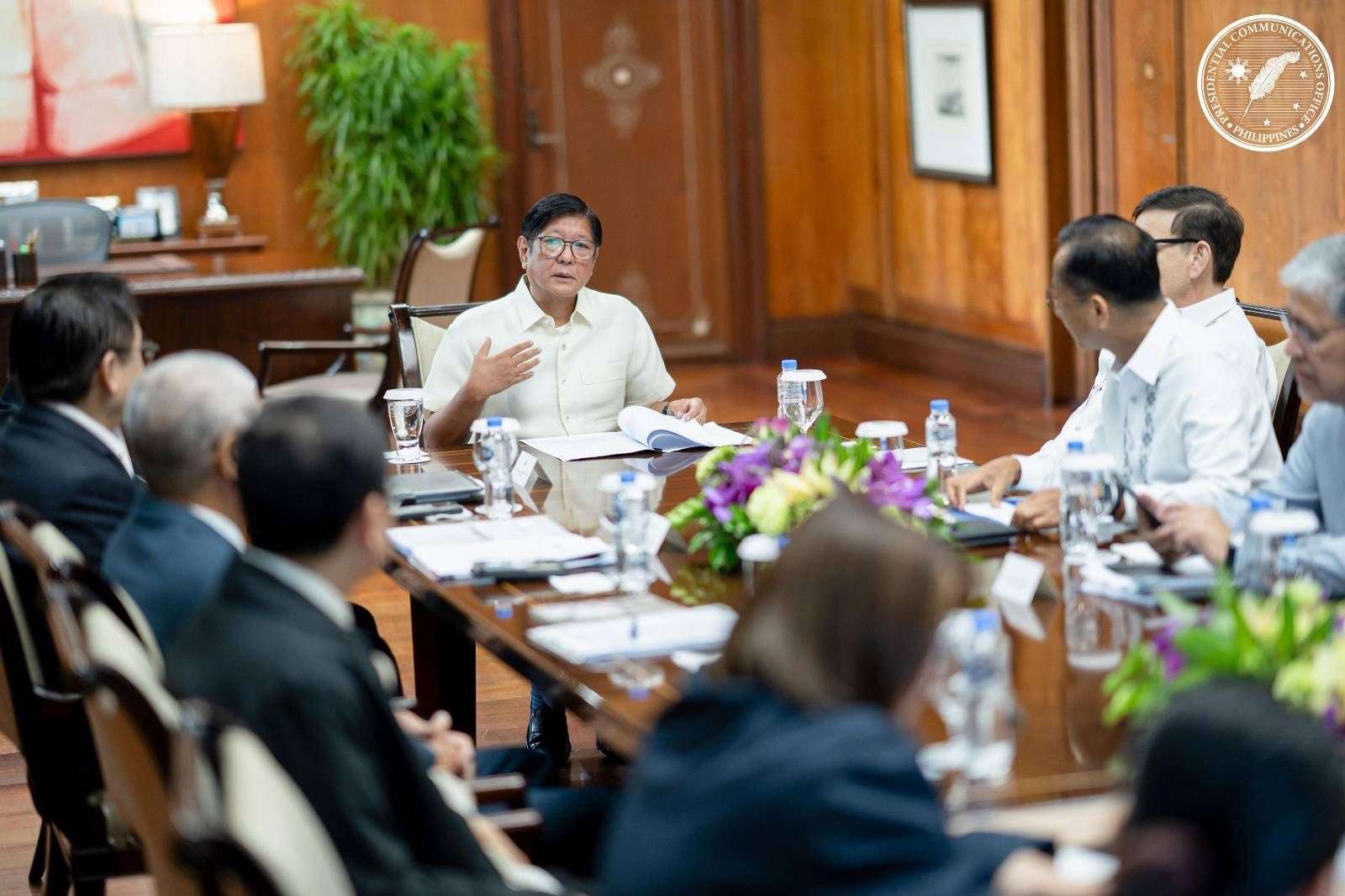
Speaking in Tarlac, President Marcos Jr. discussed the outcomes of his Tuesday meeting with his economic team at Malacañan to assess the potential economic repercussions of the Middle East tensions. “So far, there is no effect. So, there’s no significant effect on the economy,” Marcos said, when asked about the results of his meeting.
His primary concern now is domestic market behavior. “‘Yun lamang, binabantayan natin ngayon ‘yung price gouging dahil ang dami ko nang nakita, nagtataas ng presyo. Hindi naman tumaas ang presyo ng langis. So, ‘yun ang babantayan natin ngayon (The price gouging is the only thing we’re monitoring right now, because I’ve seen a lot of prices going up. Prices don’t go up like this. That’s what we’re monitoring right now). That’s what we’re going to watch,” he added.
While acknowledging that the ongoing crisis in the oil-rich region may affect the prices of oil, Marcos noted that crude oil prices actually fell to USD69 from USD79, following the announcement of a ceasefire agreement between Iran and Israel. When asked if the government would still grant fuel subsidy for public utility drivers and other affected stakeholders despite the decline in oil prices, the President stated it would be unnecessary for now. “Kung hindi nagbago ang presyo, then we do the same like before. Ang sinasabi namin, hindi ayuda, subsidy. ‘Pag tumaas ang presyo. Kung ‘di tumaas ang presyo ng langis, there’s no need for that (If the prices don’t go up, then we do the same like before. What we’re saying is, not assistance, but subsidy. If the prices go up. If the prices don’t go up, then there’s no need for that),” he said. “They can proceed. We can do business as usual. The price of oil has not gone up. So, we do not need to talk about the subsidy yet. The price of oil has not gone up. It went up for one day, then it came back down.”
The Tuesday meeting, attended by key Cabinet members including economic managers and officials from the Department of Energy (DOE), Department of Labor and Employment, Department of Finance, Department of Foreign Affairs, and the National Economic and Development Authority (NEDA) led by economic czar Frederick Go, focused on concrete measures that would protect Filipinos from the effects of the ongoing tensions between Iran and Israel. Discussions included plans for fuel subsidies, cash aid, and government support to keep commodity prices and transportation fares affordable while maintaining economic stability.
DOE officer-in-charge Sharon Garin, in a separate briefing, affirmed that based on their assessment with economic managers, the impact of the war would be minimal due especially to the ceasefire and the “slowing down of tensions.” “The impact is so minimal to our economy that it does not seem alarming as of now,” Garin stated, adding, “That was the feeling eventually na the impact won’t be as alarming for today. We’ll see tomorrow kung may changes pa sa situation ng Middle East but everybody is closely monitoring what is happening there.”
These statements follow U.S. President Donald Trump’s declaration on Tuesday that a ceasefire between Iran and Israel was in force, urging both sides “not to violate it.”