

#SONA2025
Marcos Jr. delivers 4th SONA: Unity, economy, social services, accountability highlighted
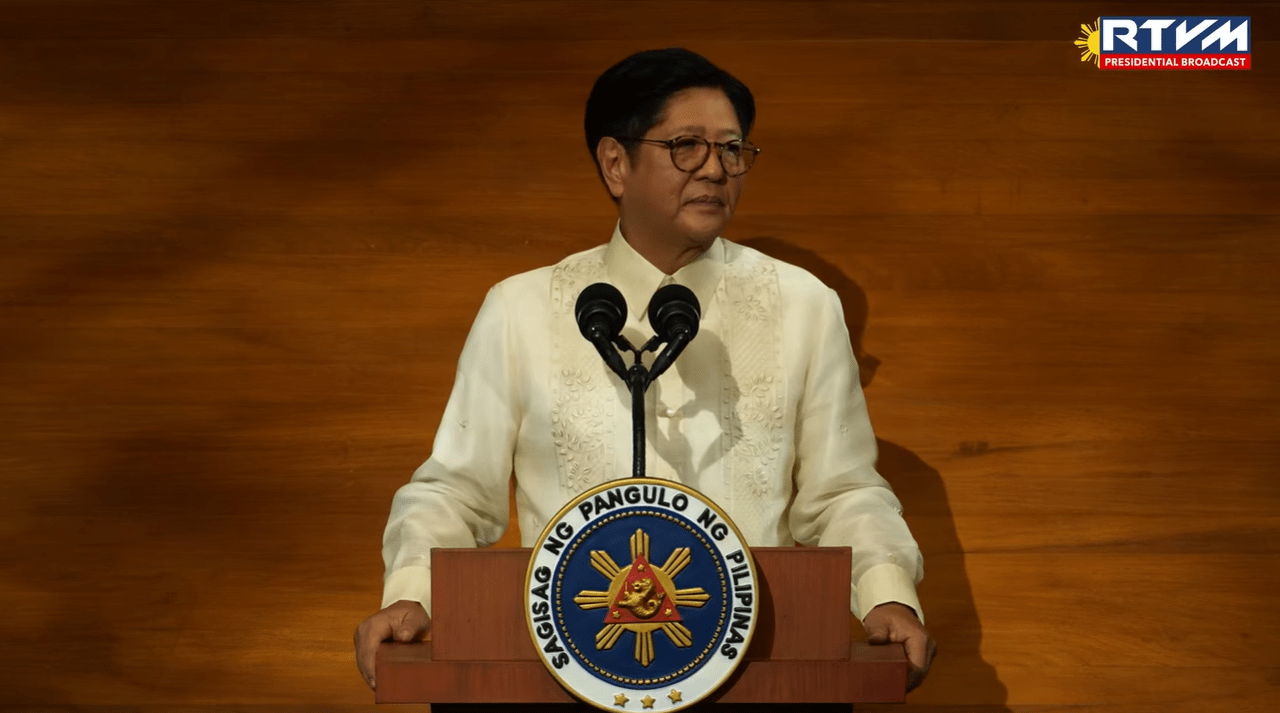
(UPDATED) — In his fourth State of the Nation Address, President Ferdinand R. Marcos Jr. addressed key issues facing the Philippines, including the economy, agriculture, energy, education, healthcare, and public services. The president emphasized a renewed focus on improving the lives of ordinary Filipinos and tackling long-standing problems.
Economy and livelihood
President Marcos Jr. acknowledged the positive economic indicators, such as increased business confidence, lower inflation, and job growth, but stressed that these are meaningless if Filipinos still struggle. He pledged to intensify efforts in the administration’s remaining three years to surpass current levels of relief for citizens.
A central theme was job creation, with the Department of Labor and Employment (DOLE), Department of Trade and Industry (DTI), Department of Social Welfare and Development (DSWD), and Department of Tourism (DOT) tasked with finding opportunities for the remaining 4% of the workforce without jobs. The President also committed to providing capital and protection for intellectual property, and offering free training and capital for microenterprises, aiming to help nearly 2.5 million impoverished families start their own small businesses.
He called on businesses to invest in agriculture and delivered a message to the international business community: “The Philippines is ready. Invest in the Filipino”.
Agriculture
President Marcos Jr. announced the successful pilot launch of the “P20 per kilo of rice” program in Luzon, Visayas, and Mindanao, and stated that it would be rolled out nationwide through KADIWA stores with a budget of ₱113 billion for the Department of Agriculture (DA). He issued a stern warning to traders who manipulate rice or palay prices, calling such actions “economic sabotage”.
To address high pork prices, the administration is boosting local production by distributing piglets and gilts, and constructing biosecured facilities. Vaccination against African Swine Fever (ASF) has also begun and will be expanded. Production of various agricultural products, including palay, corn, pineapple, banana, mango, coffee, cacao, calamansi, sugarcane, onions, and garlic, has been increased. Over 8.5 million farmers and fisherfolk have received assistance, with plans to intensify government programs to help more. Thousands of kilometers of farm-to-market roads and irrigation systems have been built or are underway, along with the distribution of machinery and facilities to farmers and fisherfolk. Rice Processing Systems and fiberglass boats for fisherfolk will also be provided.
For the coconut industry, 15 million hybrid and high-grade coconut seeds will be planted annually, aiming for 100 million trees across the Philippines. The President also sought an amendment to the Coconut Farmers and Industry Trust Fund Act to better suit farmers’ needs. Scientific advancements and modern farming techniques are being utilized with the help of the Department of Science and Technology (DOST). Scholarships and programs in agriculture will be offered to encourage youth participation. The Department of Agrarian Reform (DAR) is expediting the distribution of CLOAs and E-Titles, ensuring agrarian reform beneficiaries are debt-free.
Energy
Despite the increase in power plants and the country’s reputation for renewable energy, challenges like 3 million households without electricity, frequent brownouts, and high electricity prices persist. Since the start of the administration, 2.5 million households have gained electricity access, with plans to connect 1 million more by 2028 through solar home systems. Approximately 200 power plants will be completed in the next three years, capable of energizing 4 million households, 2,000 factories, or 7,000 offices and businesses. The Department of Energy (DOE) and National Electrification Administration (NEA) are tasked with meeting electricity connection targets by 2028. The DOE will promote the Net Metering Program, and the Energy Regulatory Commission (ERC) will expedite its approval process, allowing consumers to save and sell excess electricity. The Lifeline Rate, which provides discounted electricity, has been expanded beyond 4Ps members to include low-income families in the Listahanan program.
The President addressed the widespread brownout in Siquijor, which led to a state of calamity, attributing it to expired permits, neglected generators, slow action, and poor procurement systems. He ordered the DOE, NEA, and ERC to normalize Siquijor’s power service by year-end, establish long-term solutions, investigate negligence, and mandate refunds where necessary.
Water
The President acknowledged complaints from over 6 million consumers about water not reaching their taps despite ongoing large-scale clean water supply projects and modern water filtration systems. The Local Water Utilities Administration (LWUA) is implementing measures against inefficient water districts and their joint venture partners to ensure proper service and affordable prices, holding those responsible accountable for negligence.
Education
Addressing deficiencies in knowledge and skills, particularly in mathematics, science, reading, and comprehension, as well as high dropout rates, the administration is prioritizing education. The Academic Recovery and Accessible Learning (ARAL) Program and Early Childhood Care and Development initiatives have been launched. Mental health support for students, including additional school counselors, is also a focus. Over 300 Barangay Child Development Centers and “Bulilit Centers” will be built, with remote areas prioritized, to address a backlog in daycare centers since 1990.
The Department of Health (DOH) is expediting childhood vaccinations. The YAKAP Caravan provides free medical check-ups, lab tests (including cancer screening), and medication for students and teachers. In the past three years, nearly 22,000 classrooms have been opened, with a target of adding 40,000 more by the end of the administration in partnership with the private sector. Tutoring and remedial programs for students will be expanded. DOLE and DSWD are continuing internship and pre-employment programs for college students. Public school teachers are receiving laptops, with assurance of no anomalies in procurement. High-tech and digital learning materials, smart TVs, free Wi-Fi, and free load for Bayanihan SIM cards are being provided.
The President emphasized that teacher performance will not solely be based on the number of students who pass, but on how many they improve and inspire. Efforts are being made to ease teachers’ burdens by adding 60,000 teaching items, removing nearly 100 irrelevant documents, digitizing remaining paperwork, and ensuring compensation for teaching overload and overtime.
The Technical Vocational Education and Training (TVET) of TESDA is being integrated into Senior High School, allowing students to choose specializations and gain NC II or NC III certifications, enabling them to work immediately after graduation. Significant funds are allocated for free public college education, subsidies, and financial assistance. Over 2 million students annually receive free college education, with an additional 260,000 benefiting since the administration began. TESDA scholarships have increased, with over 200,000 added in 2024. Children of Listahanan and 4Ps beneficiaries will be prioritized for college admission in the next three years. The Philippines ranks second in ASEAN for college and TechVoc enrollment. The number of world-recognized universities and colleges in the country has increased from 22 in 2022 to 114, with 60 being public schools. Presidential Merit Scholarships will be awarded to high school graduates with high honors.
Healthcare and nutrition
The 4Ps program continues, with plans to amend its law to ensure sufficient time for beneficiaries to overcome poverty. Over 5 million households have benefited from conditional cash grants, and nearly 1.5 million families have graduated from the program. Local Government Units (LGUs) are urged to enroll homeless individuals in 4Ps and other DSWD programs.
The “Walang Gutom” program will assist 600,000 vulnerable households with nutrition, expanding to 750,000 by 2027. DSWD and DepEd’s feeding programs for daycare centers and public schools have provided nutritious food to over 3.5 million students. An additional ₱1 billion will be allocated next year to expand this program.
The President also highlighted the issue of increasing obesity among adults and encouraged active lifestyles, promoting sports, leagues, fun runs, fun walks, aerobics, and Zumba. LGUs are encouraged to open parks and plazas for exercise, and “Car-Free Sundays” will be implemented. The Philippine Sports Commission (PSC) will open its track and field ovals in Pasig, Manila, and Baguio to the public for free jogging. Full support will be given to sports and athletes nationwide, with new national sports development programs starting in schools, including the return of sports clubs and intramurals in public schools. PAGCOR will continue to support sports programs.
The President acknowledged the high cost of healthcare, medication, and the lack of medical facilities and doctors, especially in remote areas. Over the past three years, public hospitals and specialty centers have increased, with 53 BUCAS centers providing free outpatient services. For the first time, every town in the Philippines now has a doctor.
PhilHealth benefits have been expanded and improved, covering heart conditions (heart attack, open-heart surgery, heart valve repair/replacement). A Cancer Assistance Fund is available, along with funds for HPV vaccines and ₱1.7 billion for other cancer medications not covered by PhilHealth. Dialysis sessions (three times a week for a year) and necessary medications are now free. The PhilHealth limit for kidney transplants has increased from ₱600,000 to ₱2.1 million, and post-surgery services and medications are also covered. PhilHealth coverage has also increased for severe dengue (₱47,000) and cataract removal (₱187,000 from ₱16,000). Outpatient services, emergency room visits, eye exams, and malnutrition treatment for children are also covered. For Persons With Disabilities (PWDs), therapy, rehabilitation, and essential support equipment are covered. PhilHealth is expediting payments to hospitals and clinics.
The Medical Assistance Program has helped over 11.5 million Filipinos, and its process will be streamlined through the eGov app. The President declared “zero balance billing” for basic accommodation services in DOH hospitals, meaning patients will no longer have to pay their bills.
Infrastructure
The administration is continuing its extensive infrastructure program, including roads, bridges, trains, airports, seaports, irrigation, and affordable housing. Some projects will be completed within his term, while others will provide benefits beyond it, as the focus is on building for the future.
Improvements are ongoing for MRT and LRT services, alongside the construction of the North-South Commuter Railway and the Subway. The discount for PWDs, seniors, and students on LRT and MRT fares has been increased from 20% to 50%. A “1+3 Pamilya Pass” for Sundays has been introduced for families to save on leisure and church trips. The Dalian trains, unused since 2014, have begun operations on the MRT, with more carriages expected to be operational by the end of the year and in the coming years. The “Love Bus” will be brought back as a free service, starting with pilot testing in Davao and Cebu, to be followed by other areas in Visayas and Mindanao.
Construction of the 32-kilometer Bataan-Cavite Interlink Bridge across Manila Bay will begin before the year ends, reducing travel time from Mariveles to Naic from five hours to 45 minutes. The PNR Bicol Line, damaged by Typhoon Kristine, is being repaired and strengthened, including the Binahan Bridge, and will extend to Ragay, Camarines Sur, and Tagkawayan, Quezon. This will significantly ease traffic from Quezon to Bicol. A section of the SLEX extension from Sto. Tomas, Batangas, to Tiaong, Quezon, is expected to open to motorists in 2026, reducing a four-hour journey to one hour once completed. The DOTr and DPWH are tasked with overseeing these projects to ensure quality, durability, and timely completion.
The Nalil-Sikkiat Bridge in Tawi-Tawi has opened, and the Malassa-Lupa Pula bridge will be completed next year. The Mindanao Transport Connectivity Improvement Project will rehabilitate 428 kilometers of major roads connecting Cagayan de Oro, Davao, and General Santos.
The President emphasized the urgent need for the rehabilitation of the Guadalupe Bridge, stating it will not be delayed until the next administration due to public safety concerns. A detour bridge will be constructed on both sides before work begins on the main bridge. He also highlighted the importance of addressing the condition of hanging bridges nationwide, citing incidents of collapse that have harmed students and teachers. The DILG, DPWH, and OPAPRU are ordered to inspect and repair all such bridges, with assistance from PAMANA and other programs.
The President strongly condemned corruption in infrastructure projects, including mismanagement, faulty design, substandard materials, project delays, and neglect of maintenance. He cited the ₱1-billion Cabagan-Sta. Maria bridge in Isabela, which collapsed days after its opening despite 10 years of construction. In contrast, he praised the 50-year-old San Juanico Bridge for its durability but noted its lack of proper maintenance. Under “Build Better More,” citizen welfare and safety are paramount, ensuring correct design, high quality, timely completion, and proper maintenance.
Public services and digitalization
The President underscored the importance of internet access for all citizens. Phases 1, 2, and 3 of the National Fiber Backbone project have been completed to strengthen and speed up internet. Free Wi-Fi sites have increased from 4,000 in June 2022 to nearly 19,000 nationwide. Over 1 million SIM cards with free data are being distributed to schools, especially in remote areas. New cell towers and sites are being built in Geographically Isolated and Disadvantaged Areas (GIDAS). The DICT and DepEd are ensuring all public schools have internet connection by the end of the year.
The eGov app, launched in 2023, is widely used, offering over 40 government and LGU services, including driver’s license renewal, PhilHealth, Pag-IBIG, GSIS, OFW documents, Immigration and Customs declarations, bio-data creation, job searching, and government IDs (including National ID). Soon, NBI Clearance, BEEP card for MRT/LRT, and eTIN from BIR will also be available on the app.
The President addressed the Land Transportation Office (LTO) backlog in motor vehicle plate production since 2014, urging them to prevent future backlogs and release new vehicle registrations and plates within the promised three days.
Peace and order
Peace is a crucial foundation for the “Bagong Pilipinas” (New Philippines). The Philippine National Police (PNP) and Armed Forces of the Philippines (AFP) are being strengthened with armament, combat vehicles, and weapons for modernization and comprehensive defense. Thousands of former rebels have returned to society and are being supported with their families through community development, roads, water supply, and livelihood programs. Over 13 million Filipinos are now safe from conflict, with health stations, classrooms, water systems, and streetlights provided in their communities. The President declared that no more guerrilla groups remain in the country, and the government will ensure none are formed again. The AFP, PNP, and former rebels are collaborating to maintain peace and order in the BARMM.
Despite declining crime rates, the President acknowledged public anxiety, especially for victims. Police forces are increasing patrols and committed to responding to calls within five minutes. The government is working to solve cases of missing persons linked to syndicates in illegal cockfighting, vowing to hold masterminds accountable regardless of their influence or wealth.
Significant drug seizures have been made, totaling approximately ₱83 billion, with large shipments recently intercepted in various provinces. Over 153,000 individuals have been arrested, including 9,600 high-value targets. Alarmingly, 677 government employees were among those arrested, including over 100 elected officials and over 50 police officers. The total seizures in three years are nearly equivalent to the previous administration’s total. Operations against drug dealers, both big and small, will continue.
Foreign policy
The President stated that the world views the Philippines highly due to its fair and diplomatic engagement with other nations and its adherence to international agreements and laws. He expressed gratitude to Overseas Filipino Workers (OFWs) for showcasing Filipino talent and heart globally. In the face of new threats to peace and sovereignty, the country is intensifying its preparedness, vigilance, and self-defense, while remaining patient and restrained. The Philippines has more allies who will stand with it in times of need. The foreign policy remains consistent: “the Philippines is a friend to all. The Philippines is an enemy to none,” a principle that will guide the country as it hosts the ASEAN Summit in 2026.
The government is committed to assisting Filipinos abroad, especially those in danger. The President cited the release of Filipino seafarers held by Houthi rebels after over 400 days, achieved through cooperation with the Sultanate of Oman. Over 600 Filipinos convicted of various offenses in other countries, particularly in the UAE, Qatar, and Bahrain, have been pardoned due to the government’s persistent engagement. He conveyed the nation’s gratitude to the Sultanate of Oman, UAE, Qatar, Bahrain, Kuwait, and other countries for their clemency and kindness.
Disaster preparedness
The President emphasized heightened preparedness and vigilance against disasters and calamities, especially with changing climate patterns. He noted that four typhoons have already hit in July, with PAGASA predicting 12 more by December. Four of the 24 active volcanoes are currently restive, notably Kanlaon in Negros. The country must adopt continuous improvement, learning from each experience to remedy shortcomings.
Modern evacuation centers are being built, with a directive to stop using schools as evacuation centers. Advanced technologies such as doppler radars, broadband seismic stations, and landslide sensor systems from PAGASA and PHIVOLCS are being utilized for early and effective prediction. Mobile Command and Control Vehicles from DOST have been distributed to 11 LGUs for effective rescue operations.
The President called for public cooperation, discipline, vigilance, and bayanihan (community spirit). This includes cooperation in drills, obeying warnings and directives (like immediate evacuation from danger zones), proper waste disposal, constant vigilance during bad weather, knowing nearby evacuation centers, listening to credible news, and adhering to government guidelines. He stressed the importance of bayanihan in helping affected communities, stating that every Filipino life is valuable.
Anti-corruption measures
During his inspection of areas affected by typhoons, the President observed failed and collapsed flood control projects, with some being “imaginary” or “ghost projects”. He openly denounced corruption in such projects, including kickbacks and various illicit schemes. He shamed those who conspire to steal public funds and the future of Filipinos, especially in light of homes being washed away by floods and the debt inherited by children due to stolen money.
To prevent recurrence, the President announced three immediate actions:
- The DPWH must submit a list of all flood control projects started or completed in the last three years from every region.
- The Regional Project Monitoring Committee will examine this list and report on failures, unfinished projects, and alleged ghost projects.
- This list will be published, allowing the public to scrutinize it and provide information to aid investigations.
An audit and performance review of these projects will be conducted to determine how public money was spent. Those found guilty, including complicit contractors, will face charges in the coming months. The President emphasized the need for transparency and accountability for the damage and corruption.
Furthermore, for the 2026 National Budget, President Marcos Jr. stated he would return any proposed General Appropriations Bill not fully aligned with the National Expenditure Program, even if it results in a reenacted budget.
As the administration reaches its halfway point, President Marcos Jr. affirmed his commitment for the next three years, driven by lessons learned from the Filipino people, which invigorate his work, service, and dedication. He urged Filipinos not to lose focus on the path to progress, emphasizing that it is within reach and can be achieved through collective effort. He quoted a national hero: “Only he, who, from whatever position he occupies, whether high or low, strives for the greatest good possible for his fellowmen, possesses true patriotism.” He assured the public of government support in facing global challenges, proclaiming that Filipinos are inherently brave, excellent, hardworking, resilient, and good. He concluded by declaring, “This is us. We are the New Filipino.”