


PH-INDIA RELATIONS
Philippines, India formalize strategic partnership during Marcos’s state visit
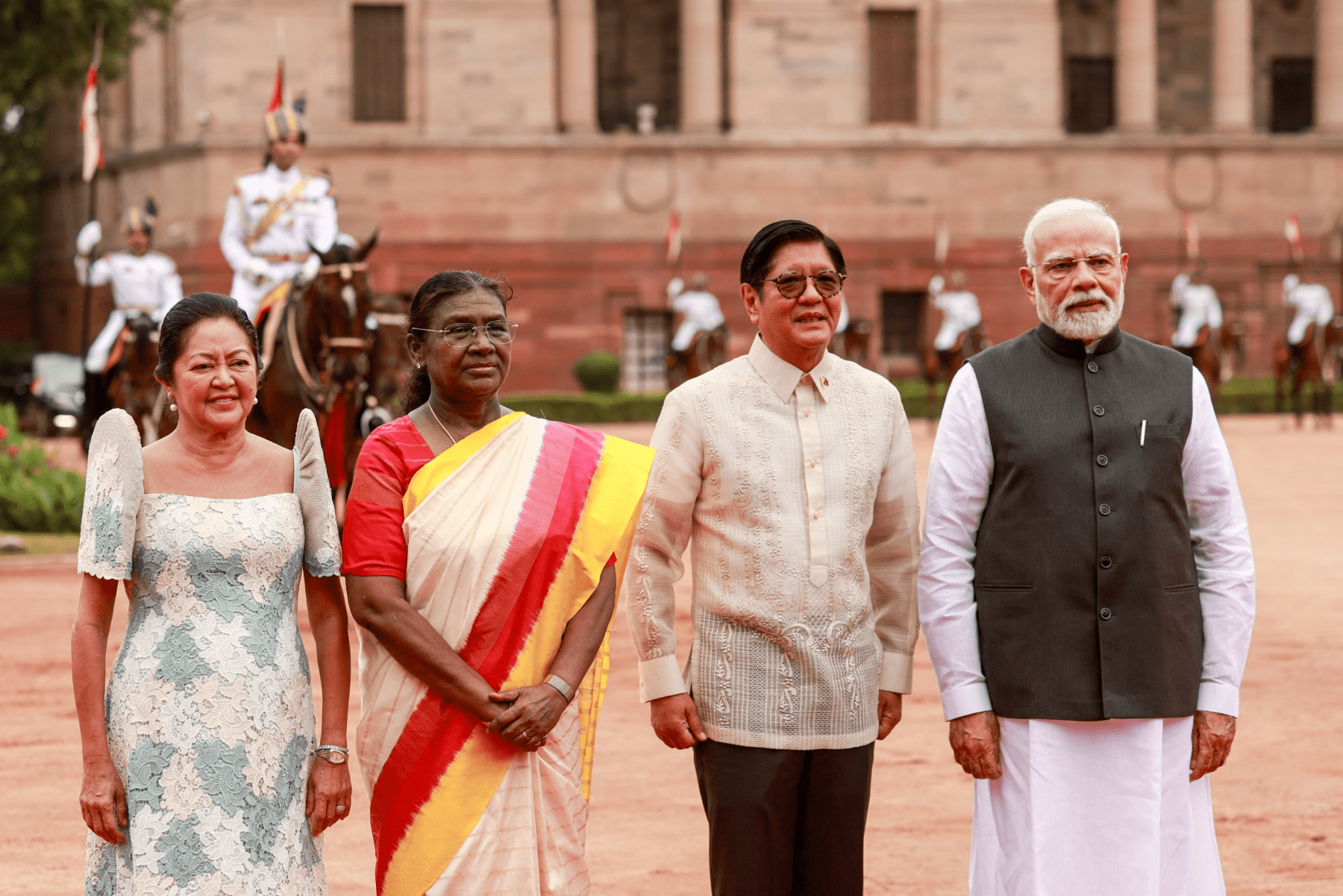
NEW DELHI, India — President Ferdinand R. Marcos Jr. on Tuesday, August 5, officially announced the establishment of a strategic partnership between the Philippines and India, marking India as the Philippines’ fifth strategic ally. This significant development came during President Marcos’s five-day state visit to India, which commenced on August 4.
“Today, our relationship enters a new epoch, as Prime Minister [Narendra] Modi and I formally launch the strategic partnership between the Philippines and India,” Marcos stated in a press conference after witnessing the exchange of bilateral agreements. He emphasized that this elevation in ties is a “momentous decision” for the Philippines, reflecting the “remarkably rapid growth” of the 75-year-old bilateral relationship. The Philippines’ other strategic partners include Japan, Australia, South Korea, and Vietnam.
President Marcos was accorded a ceremonial reception at the Rashtrapati Bhavan and paid floral tributes to Mahatma Gandhi at Raj Ghat on August 5. His engagements also included bilateral talks with Prime Minister Modi, a luncheon hosted by Modi, a call on Indian President Droupadi Murmu, and a banquet in his honor. External Affairs Minister of India, Dr. S. Jaishankar, also called on President Marcos. The President is also scheduled to visit Bengaluru.
Deepening cooperation across key sectors
The newly established Strategic Partnership is guided by a Plan of Action (2025-2029) and aims to impart a qualitative and strategic new dimension to bilateral cooperation across numerous fields:
- Defense, Security, and Maritime Cooperation: Both leaders agreed to strengthen collaboration in defense and security. Marcos expressed satisfaction with the Philippines’ ongoing defense modernization and India’s expanding indigenous defense industry, citing the BrahMos project as an example. The first batch of BrahMos missiles arrived in the Philippines in April 2024, making it the third Southeast Asian nation to acquire the supersonic anti-ship missile system. Mechanisms for service-to-service talks, information sharing, and training exchanges between their militaries will be established. Enhanced maritime cooperation between the Indian and Philippine Coast Guards was also formalized.
- Economic, Trade, and Investment Cooperation: Marcos and Modi directed their economic teams to expedite negotiations for a bilateral Preferential Trade Agreement (PTA) to boost two-way investment. Bilateral trade reached approximately US$3.3 billion in 2024-25. Both nations will promote investments in renewable energy, critical minerals, electric vehicles, digital technologies, AI, and other sectors.
- Consular and People-to-People Exchanges: To facilitate greater exchanges, President Marcos highlighted the Philippines’ existing visa-free entry privileges for Indian tourists. In a reciprocal move, Prime Minister Modi introduced a scheme granting gratis e-tourist visas for Filipino nationals traveling to India. Both leaders also welcomed the scheduled direct flights between the two capitals in the coming months.
- Science & Technology Cooperation: A Program of Cooperation in the field of Science and Technology for 2025-2028 was signed, fostering joint research and development, exchange of information and scientists, and capacity building in priority areas. Cooperation in peaceful uses of outer space and nuclear energy will also be fostered.
- Mutual Legal and Judicial Cooperation: Agreements include a Treaty on Mutual Legal Assistance in Criminal Matters and a Treaty on Transfer of Sentenced Persons.
- Culture and Tourism: An Implementation Program on Tourism Cooperation (2025-2028) and a Cultural Exchange Program were signed to foster greater cultural exchange and tourism.
Commitment to regional stability
The Declaration on the Establishment of a Strategic Partnership reaffirms both countries’ shared interest in a free, open, transparent, rules-based, inclusive, prosperous, and resilient Indo-Pacific region, reiterating strong support for ASEAN Centrality. They underscored that the final and binding 2016 Arbitral Award on the South China Sea is a significant milestone and the basis for resolving disputes in accordance with international law. Both leaders expressed concern over “coercive and aggressive actions” in the South China Sea that impact regional peace and stability, calling on relevant parties to exercise self-restraint.
The visit comes as the Philippines and India celebrate 75 years of diplomatic relations, building on a long-standing friendship based on mutual respect, trust, and shared values.